
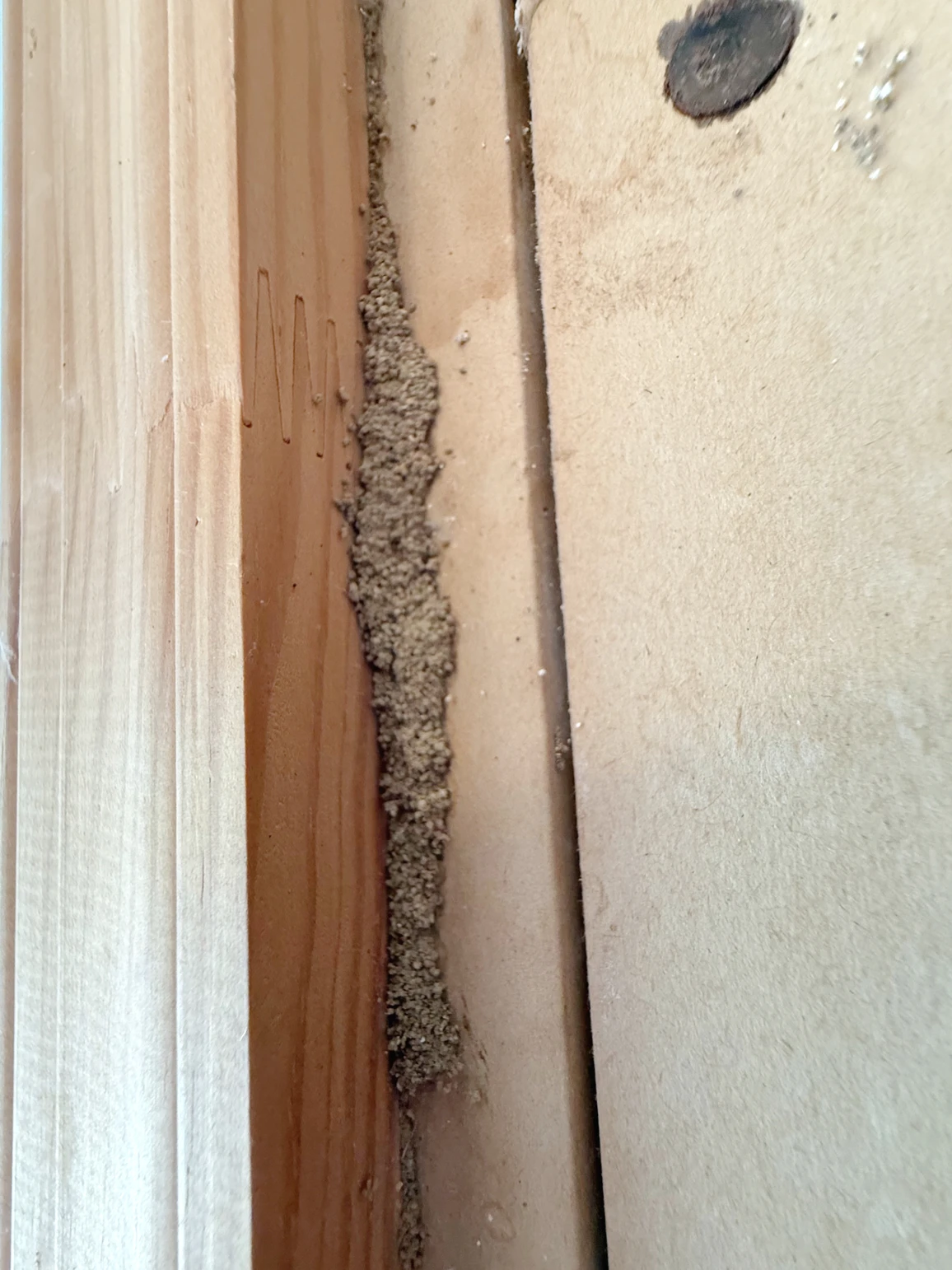
Termite damage is one of the most costly and hidden threats to a homebuyer. Every year, termites cause billions in structural damage across the U.S.—and unfortunately, much of it isn’t visible until repairs become expensive.
If you’re in the market for a home, here’s how to spot the signs of termite damage early—and why a professional home inspection before buying is one of the smartest decisions you can make.
1. Signs of Termite Damage in Wood
One of the first places to look for termite activity is in wood that appears brittle, damaged, or hollow. Termites feed on wood from the inside out, which makes detection tricky without the right tools or experience.
Here are common signs of termite damage in wood:
- Hollow-sounding walls or trim when tapped.
- Splintered or shredded wood near the base of walls or structures.
- Subterranean termite tunnels, which follow the wood grain and look like spiderweb-like grooves.
- Drywood termite frass, which appears as small sand-like pellets around wooden furniture or baseboards.
2. Mud Tubes and Surface Trails
Subterranean termites live underground but travel above ground by building mud tubes, which help them retain moisture. These tubes can be:
- Thin and pencil-sized or
- Thicker, branching across foundations, basement walls, or inside garages
If you spot mud tunnels leading from the soil to wood, that’s a major sign of an active termite infestation.
Drywood termites, on the other hand, live entirely within the wood. You may notice tiny holes on the surface of furniture or woodwork, along with the frass they push out.
3. Visual Clues of an Infestation
In addition to wood damage and mud tubes, termites leave behind other subtle signs, such as:
- Loose or buckling tiles due to moisture from termites
- Pin-sized holes in drywall
- Piles of wings from termite swarms, usually near windowsills or light fixtures
- Crumbling wood or sagging floors that indicate structural weakness
Each of these symptoms can be mistaken for water damage, poor construction, or aging materials—which is why a trained inspector is essential.
4. Listen for Termite Activity
Believe it or not, termites can sometimes be heard. If you tap on a wooden wall and it sounds unusually hollow, that’s a red flag. You might even hear faint rustling or swishing sounds inside walls where large colonies are active—especially at night when the house is quiet.
5. Why a Termite Inspection Matters Before You Buy
It’s hard to overstate how important it is to schedule a home inspection before buying a house—especially in areas like Maryland, where termite activity is common.
A general home inspector is limited to identifying visible signs of termite activity—they can’t inspect inside walls or behind finished surfaces. However, an experienced inspector who knows what to look for can recognize subtle clues and recommend a licensed termite specialist for further evaluation or treatment. When choosing an inspector, make sure they’re either licensed to perform termite inspections or have the training to confidently identify red flags and recommend next steps.
A qualified inspector can:
Don’t Skip the Inspection—Protect Your Investment
At Laflamme Property Inspections, we’ve seen first-hand how early detection of termite damage can save homebuyers from expensive surprises. Whether you’re buying your first home or investing in real estate, our inspections are designed to give you peace of mind—and the knowledge you need to make an informed decision.
📅 Schedule your home inspection today: https://www.laflammeinspections.com/scheduling 📞 Or call us at 443-377-4104